Alessandro Vessella di Alife — Direttore Banda di Roma
Nato ad Alife il 31 marzo 1860, vinse a 25 anni il concorso per la Banda di Roma e la trasformò da complesso militare a ensemble da concerto — applausi, fischi, e infine la cattedra all'Accademia di Santa Cecilia
Audio articoloAscolta questo articolo
0:00
—
Nato ad Alife il 31 marzo 1860, Alessandro Vessella è l'alifano che ha maturato la più grande fama nel campo della musica. Direttore della Banda Musicale di Roma per 36 anni, titolare di cattedra all'Accademia di Santa Cecilia, pioniere della divulgazione musicale gratuita al popolo: una figura straordinaria, quasi dimenticata, che merita di essere riscoperta.
Gli Anni di Formazione
Cresciuto ad Alife all'alba del Regno d'Italia, Vessella seguì i corsi del Conservatorio di Napoli, diplomandosi in pianoforte. La città partenopea era allora uno dei centri musicali più vivaci d'Europa, e la formazione al conservatorio gli aprì le porte verso una carriera fuori dal comune.
La Svolta: il Concorso per la Banda di Roma
Il destino bussò alla sua porta quando aveva solo 25 anni. Nel 1885 partecipò al concorso per direttore della Banda Musicale di Roma — e vinse. Fu l'inizio di una stagione straordinaria.
All'epoca le bande eseguivano essenzialmente musica militare. Vessella pretese di introdurre nel repertorio la musica classica dei grandi compositori tedeschi: Bach, Mendelssohn, Chopin, Wagner, Beethoven. Il pubblico romano si divise — applausi e fischi in Piazza Colonna, a volte persino bastonate. Ma Vessella, "calmo, olimpico, tirava diritto". Ci vollero anni, ma la battaglia fu vinta.
La riforma andò oltre il repertorio: Vessella ridisegnò la struttura stessa della banda, proporzionando le sonorità dei gruppi, distribuendo gli strumenti per famiglie, introducendo i saxofoni come elemento amalgamante tra legni e ottoni. Il risultato fu riconosciuto con l'istituzione di una specifica cattedra al Liceo di Santa Cecilia di Roma nel 1895.
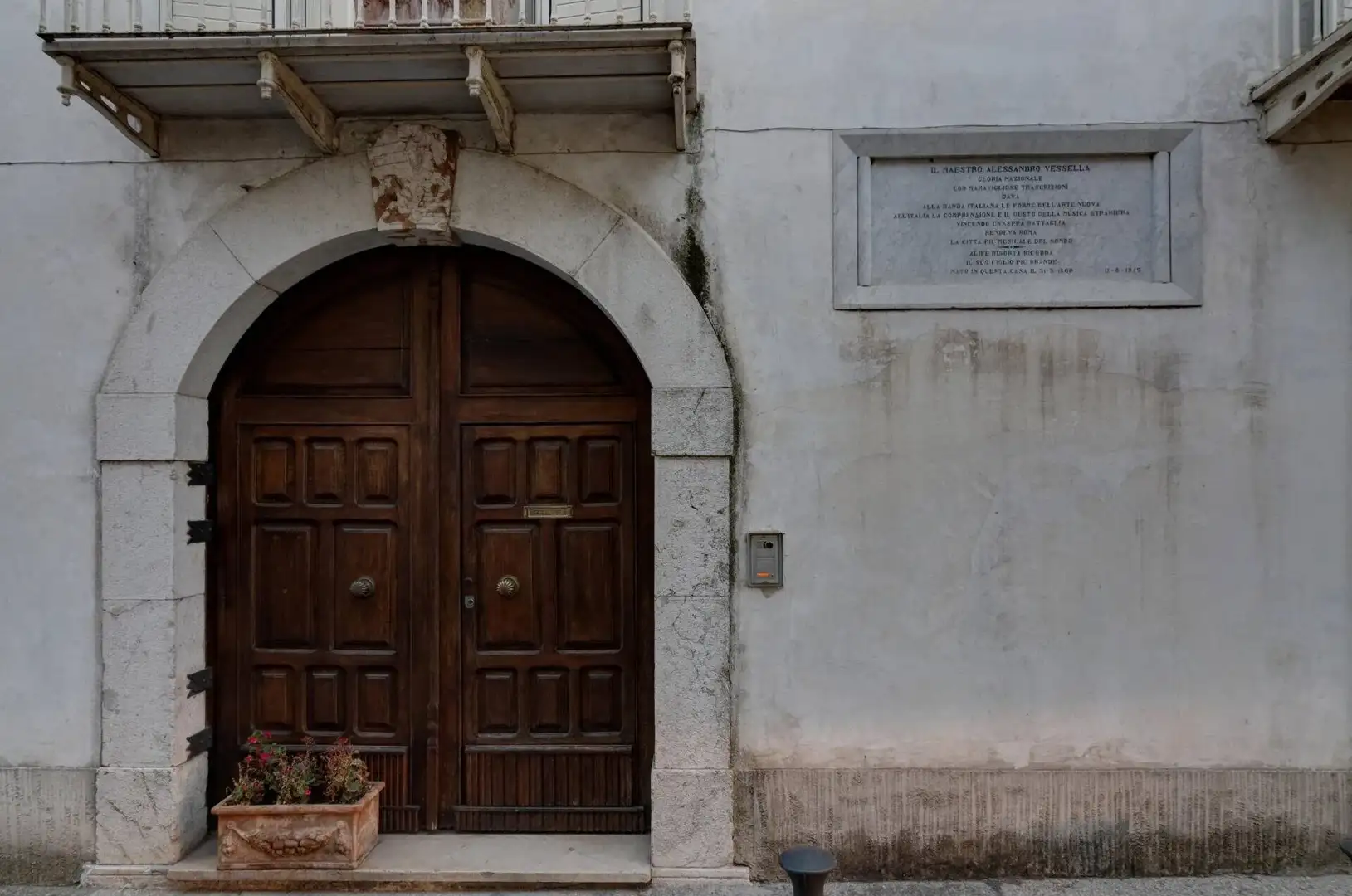
La casa natale di Alessandro Vessella ad Alife
Le Tournée Europee
Nell'estate del 1894 Vessella portò i suoi 60 esecutori in Germania: Berlino, Dresda, Monaco, Norimberga. Il repertorio di 80 pezzi di 40 autori entusiasmò il pubblico tedesco. Nel 1903 fu a Londra con 75 esecutori, accolto con ovazioni dalle folle e da Re Eduardo VII. Nel 1906 trionfò a Milano e Firenze.
La Musica per il Popolo
Dopo la crisi del 1905 e lo scioglimento temporaneo della banda, Vessella fondò un'orchestra per offrire concerti a prezzi minimi alle classi più modeste. Dal 26 novembre 1905 organizzò 50 concerti in due anni, portando Bach e Beethoven all'anfiteatro Corea — che sarebbe diventato l'Augusteo.
Le Composizioni per la Corona
Il suo nome è legato ad alcune delle pagine musicali più solenni della storia italiana: il Corteo nuziale eseguito al Quirinale per le nozze del Re (24 ottobre 1896); la Marcia funebre per la morte di Re Umberto I; Urrà!, eseguita il 18 ottobre 1898 alla Basilica di Massenzio con 300 coristi e 374 suonatori, in omaggio a Guglielmo II.
L'Apice: il Concerto del 1910
Il culmine della carriera fu il 24 giugno 1910, per il 25° anniversario della sua nomina. Vessella riunì 400 esecutori — tra cui 200 ottoni e, per la prima volta, alcuni contrabassi a corda — unendo le bande di Allievi Carabinieri, Granatieri e Fanteria.
"La forza, la potenza dell'arte di Orfeo diveniva veramente colossale e irresistibile."
— Dante B. Marrocco, Corriere del Matese, 18 aprile 1965
Gli Ultimi Anni e il Lascito
Nel 1921 Vessella fu collocato a riposo dopo 36 anni alla guida della Banda di Roma. Si spense a Roma il 6 gennaio 1929, accompagnato al sepolcro da "una folla sterminata di romani". La vedova donò all'Istituto di Storia dell'Arte e Archeologia di Roma la sua biblioteca musicale: 1.078 volumi, 1.832 opuscoli a stampa e 450 fascicoli manoscritti.
Ci ha lasciato anche una copiosa produzione scritta: Studi di strumentazione per banda (1894), Di un più razionale ordinamento delle musiche militari italiane, il Viaggio artistico in Germania e le analisi storiche sull'evoluzione della partitura per banda dal '600 all'800.
La Memoria ad Alife
Alife ricorda il suo figlio più illustre con un busto in bronzo in Piazza Comunale, accanto al monumento ai Caduti delle due Guerre Mondiali. La via che costeggia l'area del teatro romano porta il suo nome: Via Vessella.
Domande Frequenti su Alessandro Vessella
Alessandro Vessella nacque ad Alife il 31 marzo 1860. Diplomato al Conservatorio di Napoli, vinse a 25 anni il concorso per direttore della Banda Musicale di Roma — una delle più importanti istituzioni musicali italiane. Rimase alla sua guida per 36 anni, fino al 1921. Alife lo ricorda con un busto in bronzo in Piazza Comunale e con la Via Vessella, che costeggia il teatro romano.
Quando Vessella arrivò nel 1885, le bande eseguivano quasi solo musica militare. Lui impose nel repertorio i grandi compositori tedeschi: Bach, Mendelssohn, Wagner, Beethoven, Chopin. Riformò anche la struttura dell'ensemble — proporzioni tra le sezioni, distribuzione per famiglie di strumenti, introduzione dei saxofoni come elemento amalgamante. Nel 1895 la sua riforma fu riconosciuta con una cattedra specifica al Liceo di Santa Cecilia di Roma.
Il 24 giugno 1910, per il 25° anniversario della sua nomina, Vessella riunì 400 esecutori — tra cui 200 ottoni e, per la prima volta in Italia, alcuni contrabassi a corda in una formazione bandistica — unendo le bande di Allievi Carabinieri, Granatieri e Fanteria. Fu descritto dai contemporanei come un evento di potenza musicale "colossale e irresistibile". Tra le composizioni per la Corona, la Marcia funebre per Re Umberto I e il Corteo nuziale per le nozze del Re.
Alla morte di Vessella (Roma, 6 gennaio 1929), la vedova donò la sua biblioteca musicale all'Istituto di Storia dell'Arte e Archeologia di Roma: 1.078 volumi, 1.832 opuscoli a stampa e 450 fascicoli manoscritti. Tra i suoi scritti: Studi di strumentazione per banda (1894), Di un più razionale ordinamento delle musiche militari italiane, il Viaggio artistico in Germania e le analisi storiche sull'evoluzione della partitura per banda dal '600 all'800.
Born in Alife on 31 March 1860, Alessandro Vessella is the most celebrated native of Alife in the field of music. Director of the Rome Municipal Band for 36 years, holder of a chair at the Academy of Santa Cecilia, pioneer of free musical education for the people: an extraordinary figure, almost forgotten, who deserves to be rediscovered.
The Years of Formation
Growing up in Alife at the dawn of the Kingdom of Italy, Vessella attended the Conservatory of Naples, graduating in piano. The Neapolitan city was then one of the most vibrant musical centres in Europe, and his conservatory training opened the doors to an extraordinary career.
The Turning Point: the Competition for the Rome Band
Fate knocked at his door when he was just 25 years old. In 1885 he entered the competition for director of the Rome Municipal Band — and won. It was the beginning of an extraordinary season.
At the time, bands performed essentially military music. Vessella insisted on introducing into the repertoire the classical music of the great German composers: Bach, Mendelssohn, Chopin, Wagner, Beethoven. Roman audiences were divided — applause and booing in Piazza Colonna, at times even brawls. But Vessella, "calm, olympian, pressed straight ahead". It took years, but the battle was won.
The reform went beyond the repertoire: Vessella redesigned the very structure of the band, proportioning the sonorities of the sections, distributing instruments by family, introducing saxophones as an amalgamating element between woodwinds and brass. The result was recognised with the establishment of a specific chair at the Liceo di Santa Cecilia in Rome in 1895.
The birthplace of Alessandro Vessella in Alife
The European Tours
In the summer of 1894 Vessella brought his 60 performers to Germany: Berlin, Dresden, Munich, Nuremberg. The repertoire of 80 pieces by 40 composers enthused German audiences. In 1903 he was in London with 75 performers, welcomed with ovations by crowds and by King Edward VII. In 1906 he triumphed in Milan and Florence.
Music for the People
After the crisis of 1905 and the temporary dissolution of the band, Vessella founded an orchestra to offer concerts at minimal prices to the poorer classes. From 26 November 1905 he organised 50 concerts over two years, bringing Bach and Beethoven to the Corea amphitheatre — which would later become the Augusteo.
Compositions for the Crown
His name is linked to some of the most solemn musical pages in Italian history: the Wedding Procession performed at the Quirinale for the King's wedding (24 October 1896); the Funeral March for the death of King Umberto I; Urrà!, performed on 18 October 1898 at the Basilica of Maxentius with 300 choristers and 374 players, in honour of Wilhelm II.
The Apex: the Concert of 1910
The peak of his career came on 24 June 1910, for the 25th anniversary of his appointment. Vessella assembled 400 performers — including 200 brass and, for the first time, some string double basses — uniting the bands of the Carabinieri Cadets, the Grenadiers and the Infantry.
"The force, the power of Orpheus's art became truly colossal and irresistible."
— Dante B. Marrocco, Corriere del Matese, 18 April 1965
The Final Years and Legacy
In 1921 Vessella was placed on retirement after 36 years at the helm of the Rome Band. He died in Rome on 6 January 1929, accompanied to his tomb by "a vast crowd of Romans". His widow donated to the Institute of Art History and Archaeology of Rome his musical library: 1,078 volumes, 1,832 printed pamphlets and 450 manuscript fascicles.
He also left us a copious body of written work: Studi di strumentazione per banda (1894), Di un più razionale ordinamento delle musiche militari italiane, the Viaggio artistico in Germania, and historical analyses on the evolution of the band score from the 17th to the 19th century.
His Memory in Alife
Alife honours its most illustrious son with a bronze bust in the Piazza Comunale, beside the monument to the Fallen of the two World Wars. The street skirting the area of the Roman theatre bears his name: Via Vessella.
Frequently Asked Questions about Alessandro Vessella
Alessandro Vessella was born in Alife on 31 March 1860. A graduate of the Conservatory of Naples, at 25 he won the competition for director of the Rome Municipal Band — one of the most important musical institutions in Italy. He remained at its helm for 36 years, until 1921. Alife honours him with a bronze bust in the Piazza Comunale and with Via Vessella, which skirts the Roman theatre.
When Vessella arrived in 1885, bands performed almost exclusively military music. He imposed on the repertoire the great German composers: Bach, Mendelssohn, Wagner, Beethoven, Chopin. He also reformed the structure of the ensemble — proportions between sections, distribution by families of instruments, introduction of saxophones as an amalgamating element. In 1895 his reform was recognised with a specific chair at the Liceo di Santa Cecilia in Rome.
On 24 June 1910, for the 25th anniversary of his appointment, Vessella assembled 400 performers — including 200 brass and, for the first time in Italy, some string double basses in a band formation — uniting the bands of the Carabinieri Cadets, the Grenadiers and the Infantry. It was described by contemporaries as an event of "colossal and irresistible" musical power. Among his compositions for the Crown: the Funeral March for King Umberto I and the Wedding Procession for the King's wedding.
At Vessella's death (Rome, 6 January 1929), his widow donated his musical library to the Institute of Art History and Archaeology of Rome: 1,078 volumes, 1,832 printed pamphlets and 450 manuscript fascicles. Among his writings: Studi di strumentazione per banda (1894), Di un più razionale ordinamento delle musiche militari italiane, the Viaggio artistico in Germania, and historical analyses on the evolution of the band score from the 17th to the 19th century.